Stepping Into the Unknown: Reflections on ResDance and Reimagining Research
In this guest blog, Dr Gemma Harman reflects on 4 years - and 100 episodes - of her award-winning podcast, ResDance.
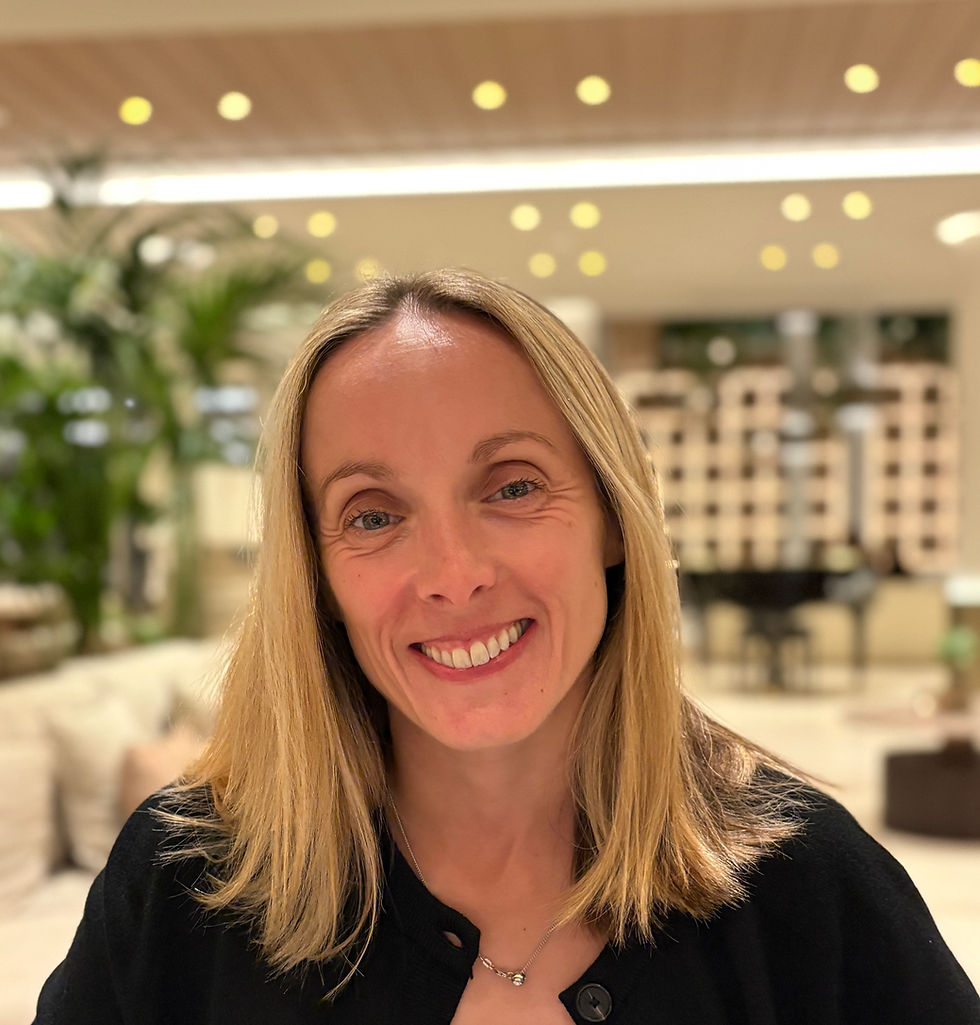
Left: photo by Sean Harman. Right: live recording with Kate Prince at The Nest, Chichester. Photo by Georgia Humphries.
At the end of January 2026, I closed a significant chapter of my professional life. After ten years at University of Chichester, I stepped away from a contracted role and found myself ready to embrace a focus on freelance life. Having worked for 17 years as an educator and researcher across Higher Education institutions and conservatoires—including formative years at Trinity Laban Conservatoire of Music and Dance (where I incidentally first met Dance in Mind's Imogen, or Jen as I know her!)—this shift felt timely and important.
Just as I was navigating this professional shift, Jen invited me to write a piece for her brilliant blog reflecting on my other labour of love: my dance research podcast, ResDance™. The invitation prompted me to pause—something I don’t often do—and to really consider what this project has meant, and continues to mean, in my life and in the field of dance research.
How ResDance Began
ResDance was born in June 2021 during the global pandemic. At that time, like many educators, I was teaching online while also home-schooling and caring for my two young daughters. One of my areas of expertise is teaching Research Methodologies and during delivery to my second year and MA Dance Students, I found myself looking for ways to encourage them to be curious and articulate about their own practice.
In seeking ways to inspire my students—and to emphasise the broader value of dance research –my husband suggested that my joint love of talking and dance research would make for a great podcast. After a quick read of ‘How to start a Podcast’ and deciding upon Anchor Spotify as the platform of choice - I launched the podcast. What began as a small initiative to engage students with emerging ideas and practices quickly became something much larger, I now have 9 series under my belt, over 100 individual episodes and with a listening audience in over 75 countries.
I am, at heart, a qualitative researcher. My work is grounded in a person-centred approach that celebrates first-person voice and subjective experience. I have always been drawn to methodologies that prioritise lived experience, nuance, and relationality. Podcasting, I realised, offered precisely that: a space for conversation, reflection, and presence on both the part of the interviewer, namely me, and the contributor.
Nine Series Later…
As I have already said, at the time of writing this, I have recorded nine series (with series ten newly launched). In fact, I was the guest on the 100th episode—a slightly surreal experience—sharing more about my background, ethos, and approach to curating the podcast with my friend and colleague Dr Elsa Urmston.
What strikes me most, looking back, is the immediacy of knowledge that podcasting affords. In our busy, fragmented lives, the ability to access thoughtful, in-depth dialogue while walking, commuting, or cooking is powerful. ResDance has become both a living archive and an intimate space of encounter. Bringing together this collection of voices has reinforced a theme that continues to feel increasingly urgent: agency. The fundamental desire to be heard. To be recognised. To contribute meaningfully.
Time and again, guests have spoken about the possibilities and limitations of platforms for expression. They have described moments of empowerment, but also experiences of feeling unheard, unseen, and marginalised. What continues to resonate for me is how curiosity fuels inquiry and in turn, such dialogue is keeping our research field alive. I often remind myself what an extraordinary privilege it is to meet such brilliant individuals—artists, scholars, educators—who are shaping dance and dance research as spaces of exploration, generosity, and learning.
Podcasting as Method
Within academic contexts, podcasting is often seen as a way of sharing research once it is “complete.” But I have come to understand it as something more generative and that podcasting can have value and have kudos in its own right. For me, the conversational format unsettles traditional research paradigms. It positions dialogue as practice and creates a safe space for reflection.
For dance research in particular, this feels significant. Our field has long engaged with methodologies that challenge and foreground practice. Podcasting sits comfortably within that family. It becomes not just a site of discussion about dance, but a site of dance research practice itself. This is an area I am interested in exploring further – so watch this space!
What ResDance Has Taught Me
As I reflect on this journey—particularly at this moment of professional transition—I find myself holding onto a few reminders that may resonate with you too:
Sometimes it is worth taking a different direction for yourself. The things you begin “just for you” can evolve into something much bigger. A close friend once reminded me that ResDance started from nothing (and I remind myself of this often)
In education—and particularly within academic worlds—there is space to imagine differently. Podcasting can be a legitimate qualitative methodology that can imagine something differently.
Curiosity matters. It sustains inquiry, connection, and growth. Every conversation has reminded me that research is not simply about outputs—it is about people.
Generosity sustains the field. Writing this reflection has reminded me how many individuals have supported, encouraged, and championed this work.
And finally ….
As I step into new challenges, embracing artistic opportunities that might (hopefully!) come my way, I carry ResDance with me—not just as a podcast, but as a practice. It has taught me to trust beginnings, value voice and to always remain curious.
If there is one thing I know after 17 years in this field, it is that dance research moves and is not static. And more often than not, it starts with a conversation.
You can listen to the 100th episode of ResDance here. It's a great opportunity to hear Gemma's further thoughts on the development of the podcast.